

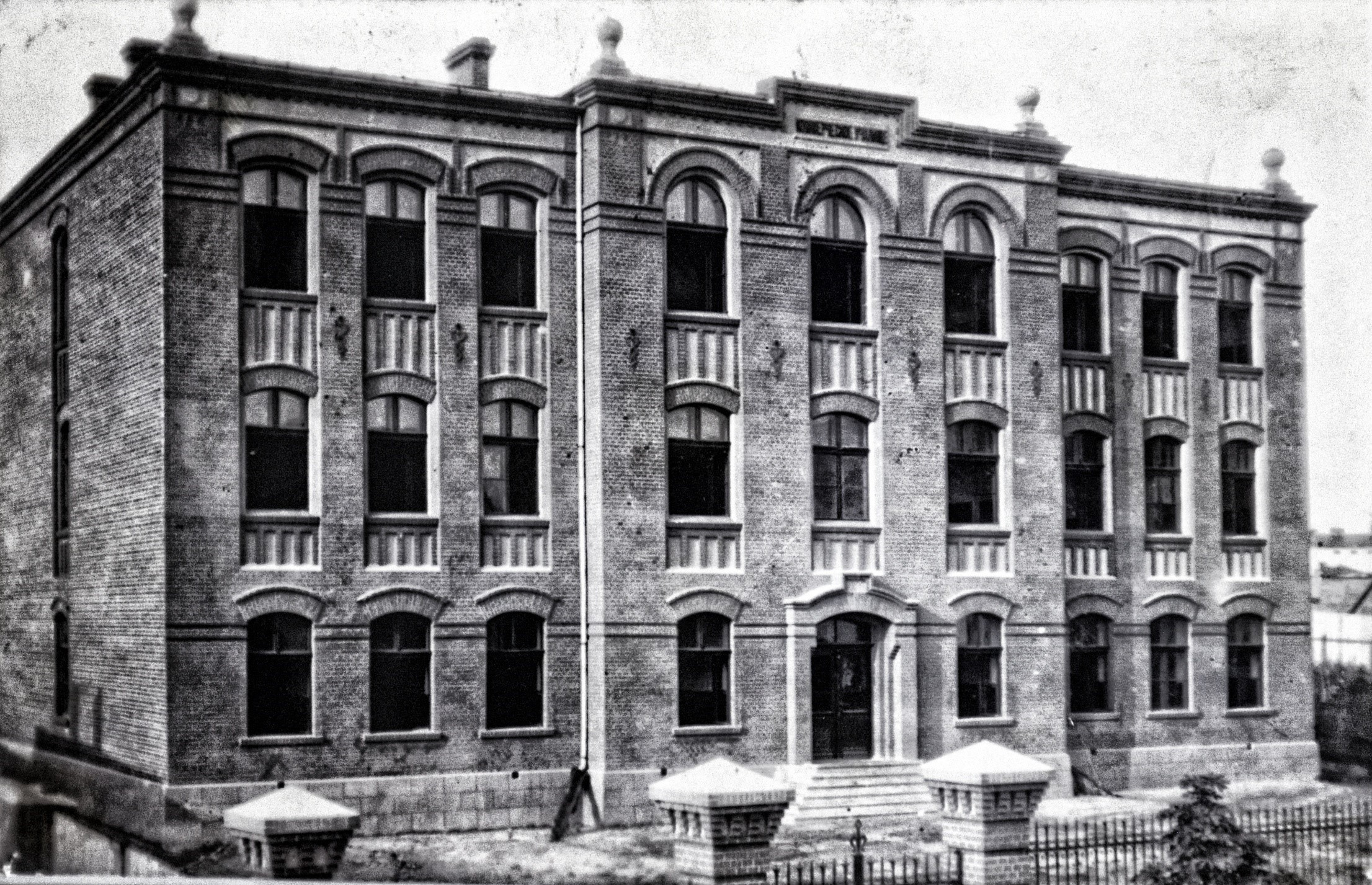
‘The 1905 strike‘, directed by Justyna Biernat, was performed by students of Secondary School No. 1, formerly Gimnazjum Humanistyczne (Humanities Secondary School). The play, followed by a discussion with the audience moderated by theatre critic Dr Joanna Królikowska, was presented on 7 and 8 March, 2025.
The Spaces of Memory Foundation would like to thank the Principle of the Secondary School, Ms Ewa Męcina, for entrusting us with the task of preparing the performance.
Written and directed by: Dr Justyna Biernat (Institute of Art, Polish Academy of Sciences, Spaces of Memory Foundation)
Cast: Stefan Batorski as Ryszard Jurgielewicz, Pola Buczyńska as Emilia Topas-Bernsztajnowa, Wiktoria Chudzik as Journalist, Gabriel Dębowski as Antoni Ronek, Julia Grzejszczyk as Bronka Baum, Kornelia Kawecka as Franciszka Blajberg, Hubert Klimczak (off-stage Governor), Łukasz Łuczka as Gustaw Bartke, Mateusz Majka as Efroim Mortkowicz, Natalia Rutkowska as Zofia Prusowa, Magdalena Rytych as Felicja Okuniew, Jędrzej Sipa (off-stage Principle), Zuzanna Stępień as Maria Krygier, Hubert Urbański as Governor, Dawid Wujek as Janitor – Józef Skwarka, Jan Żerek as Lucjan Szuster
Video: Piotr Modliński
Audio: Emilia Kleszczewska and Radio Fama
Mask of the wolf: Anna Jędraszczyk
Set design collaboration: Daria Stępień, Zofia Zielińska
Sound system: Maksymilian Dumin, Hubert Klimczak, Maksymilian Mazur, Jędrzej Sipa
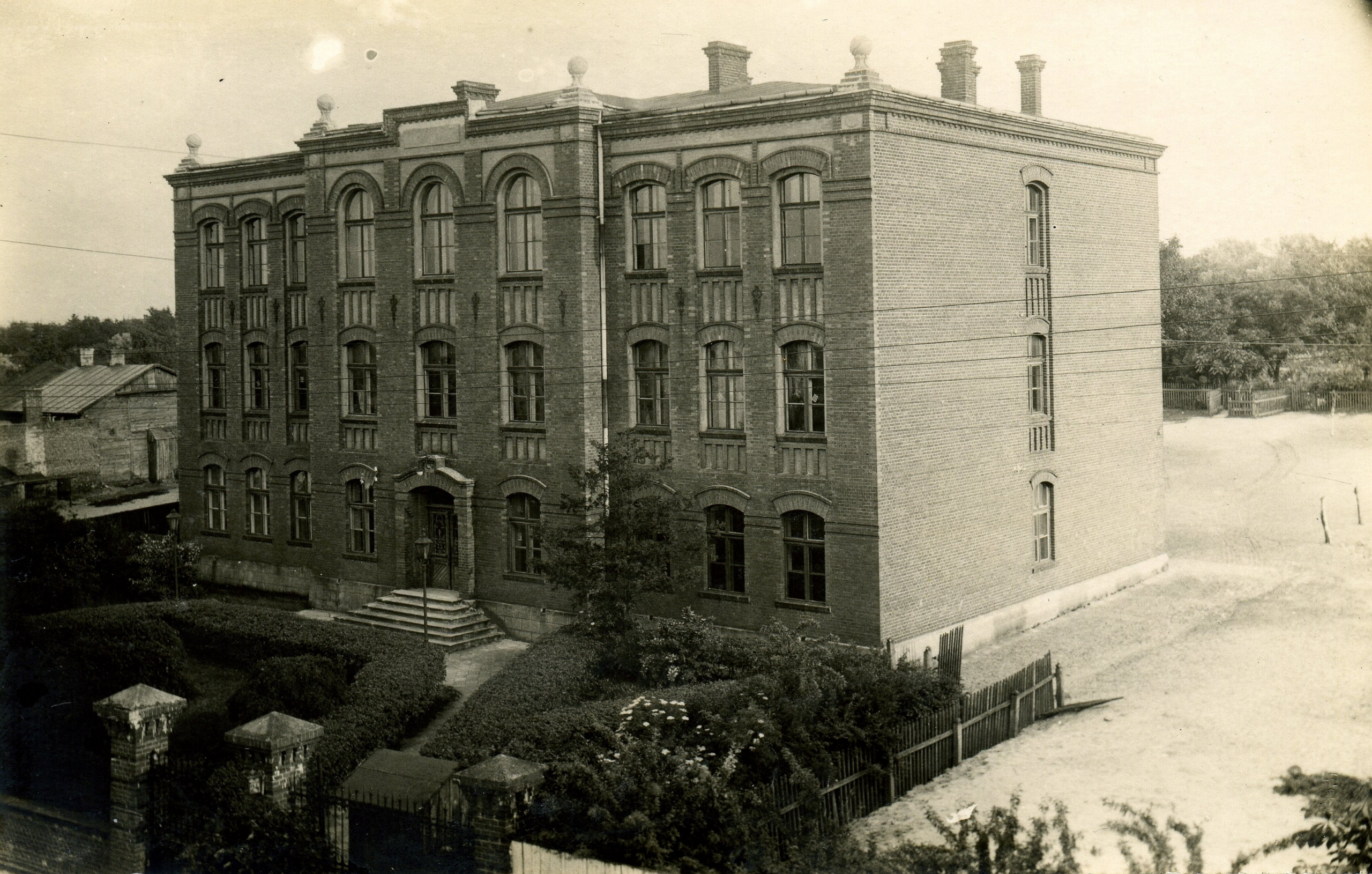
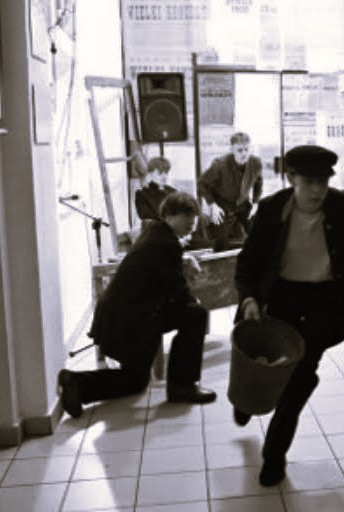
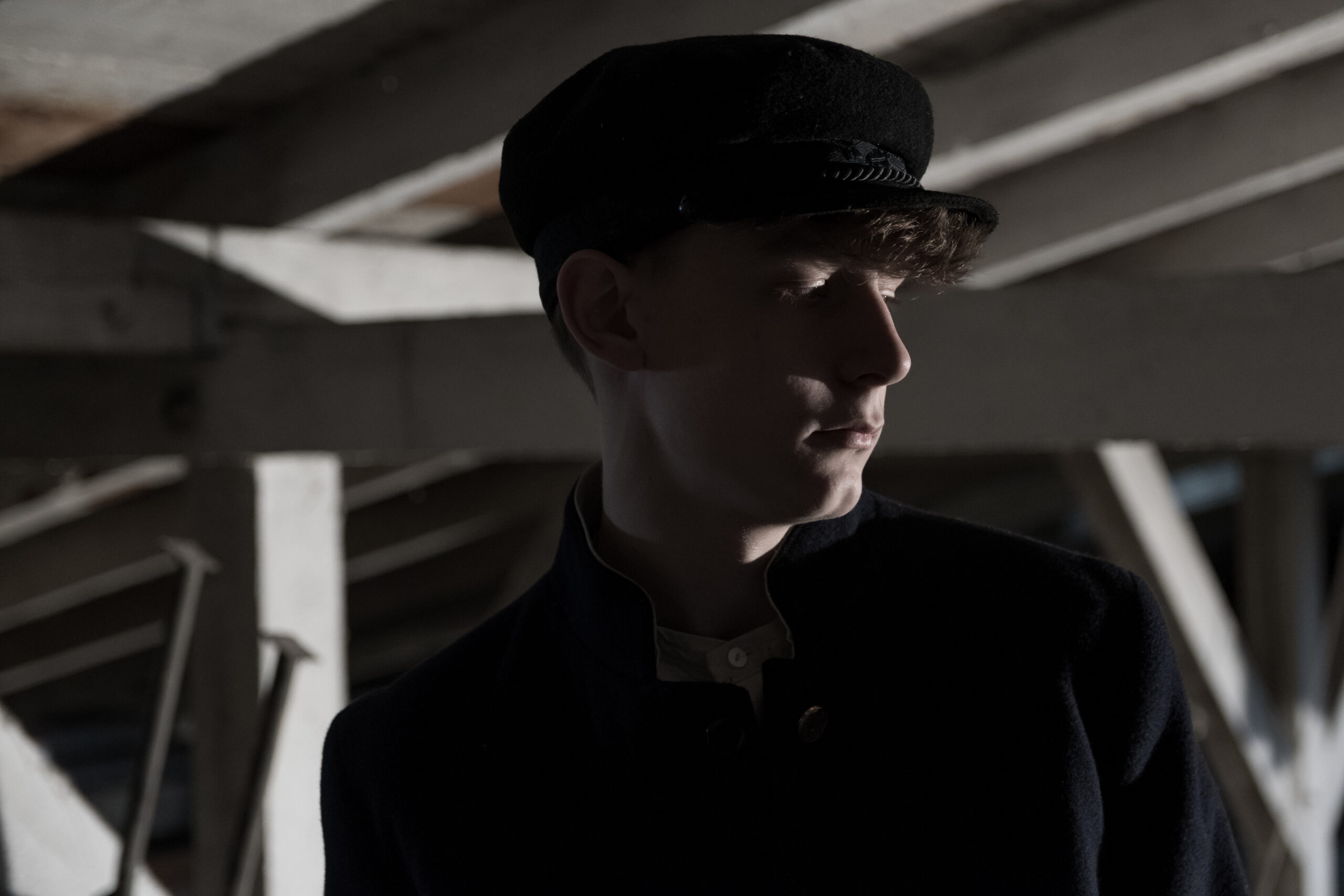
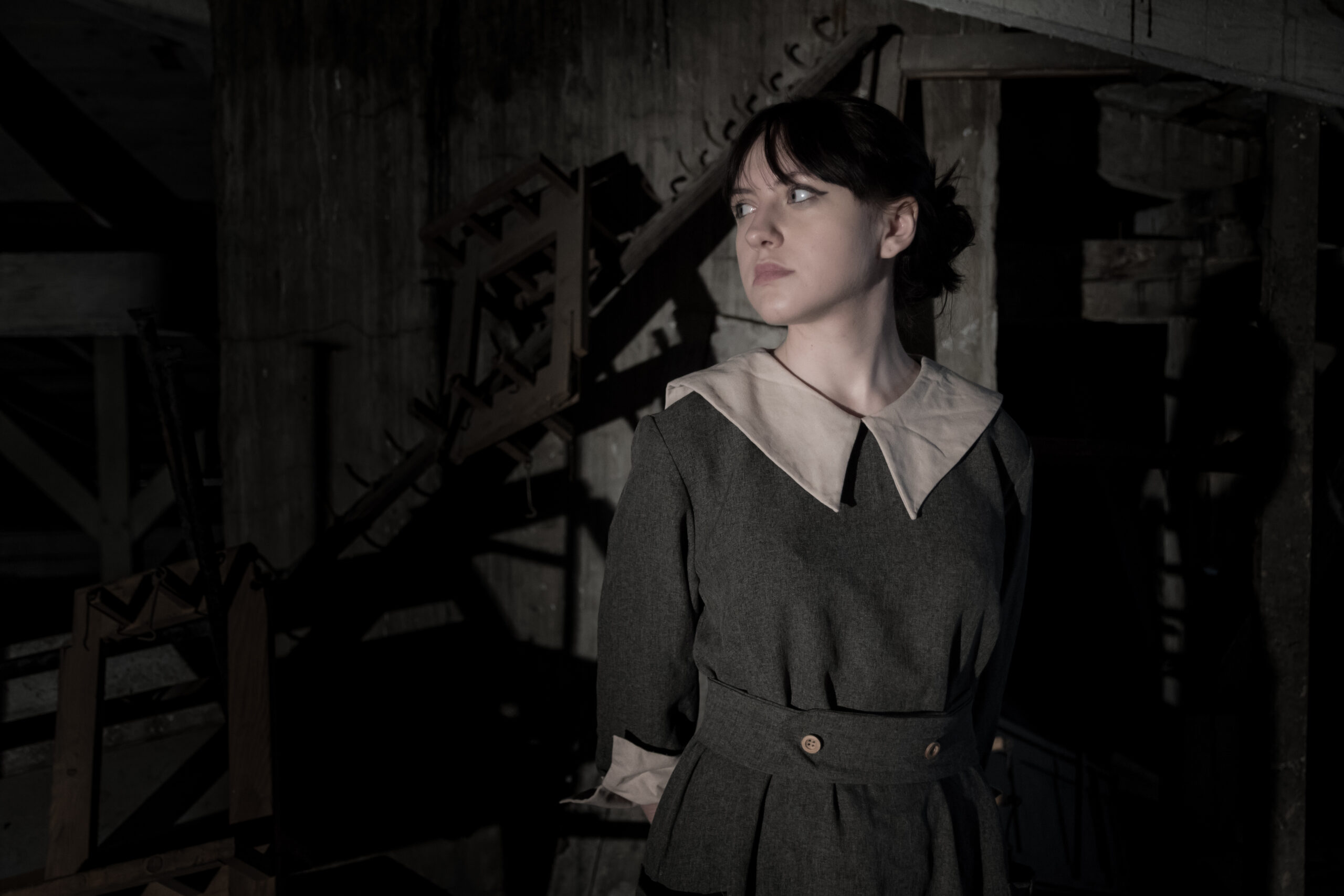
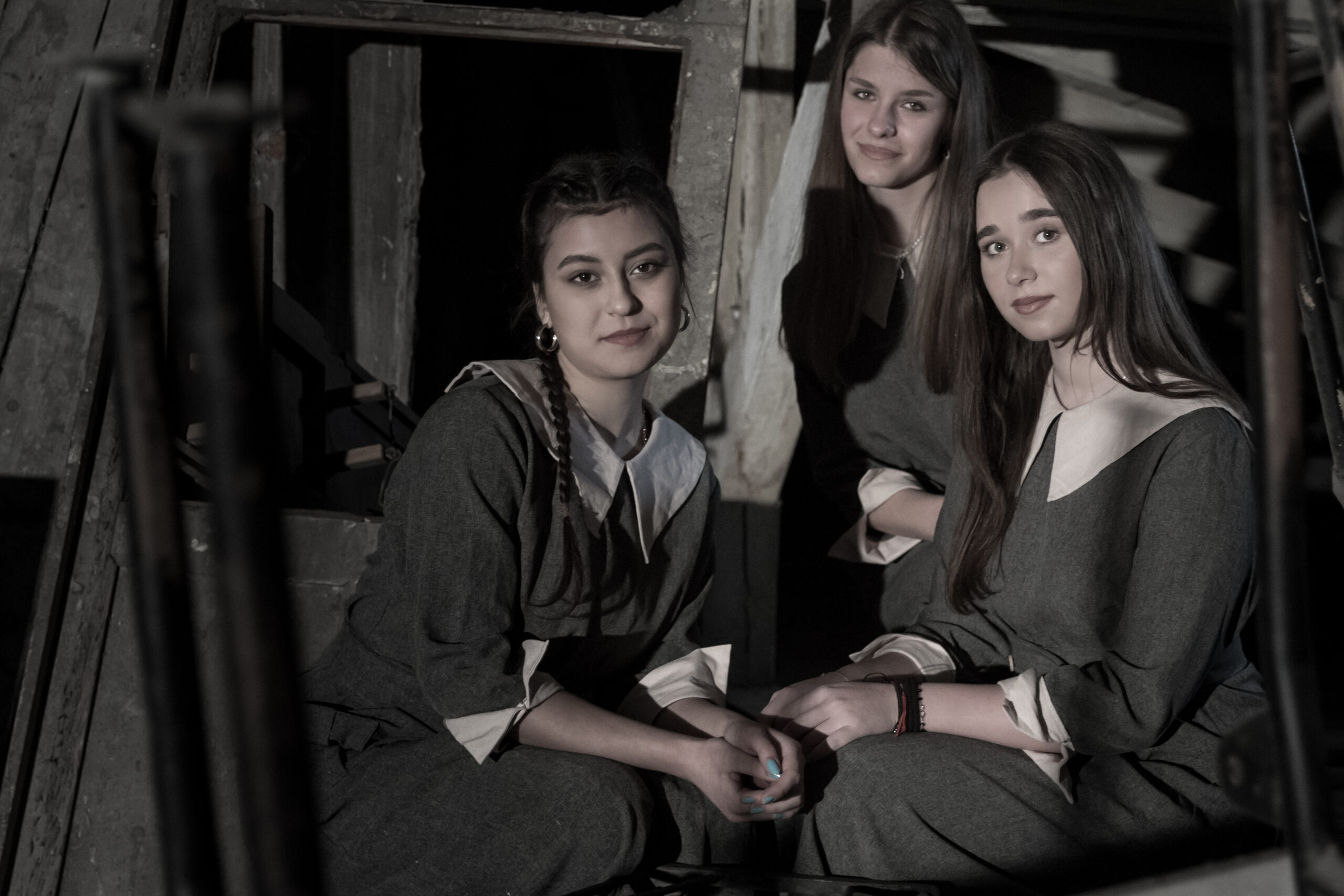
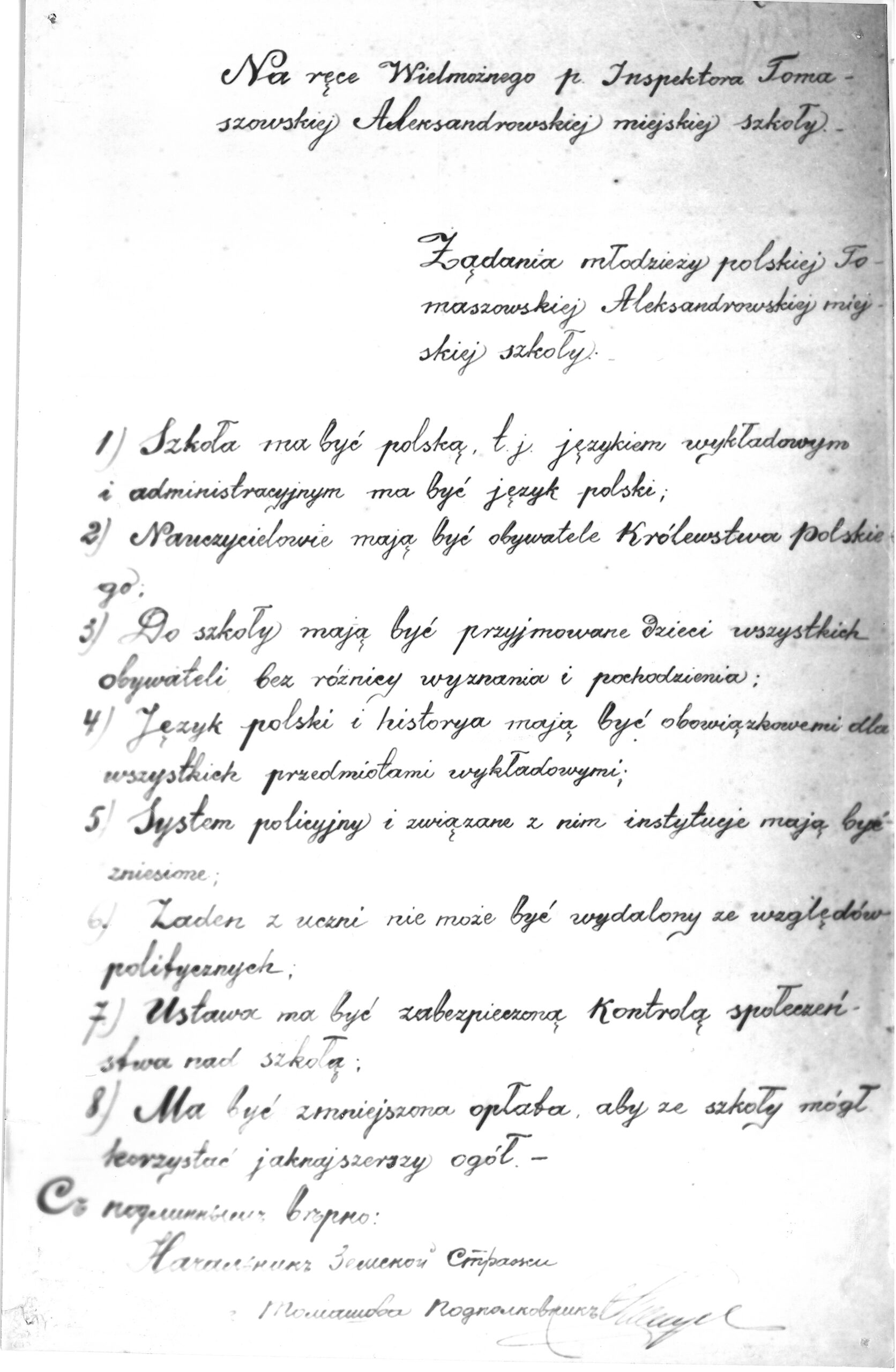
Among the many young people involved in the 1905 school strike were pupils from the seven-year Humanities Secondary School in Tomaszów Mazowiecki. The protests, which took place in many parts of the Russian partition, were aimed at fighting Russification, including introducing the Polish language into schools. The initiator of the Tomaszów strike was a fourth-year student, sixteen-year-old Lucjan Szuster. He was the focus of a performance.
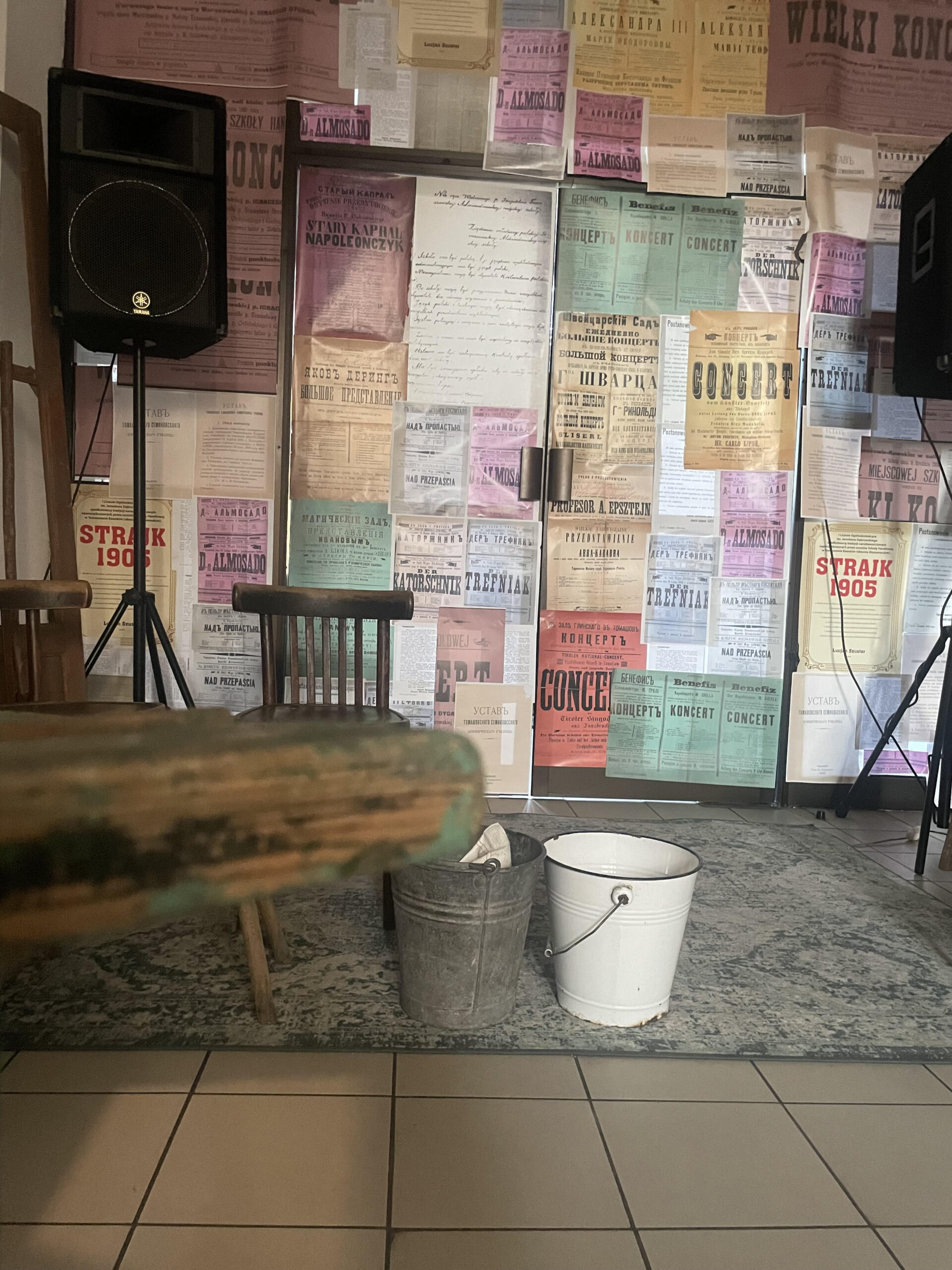
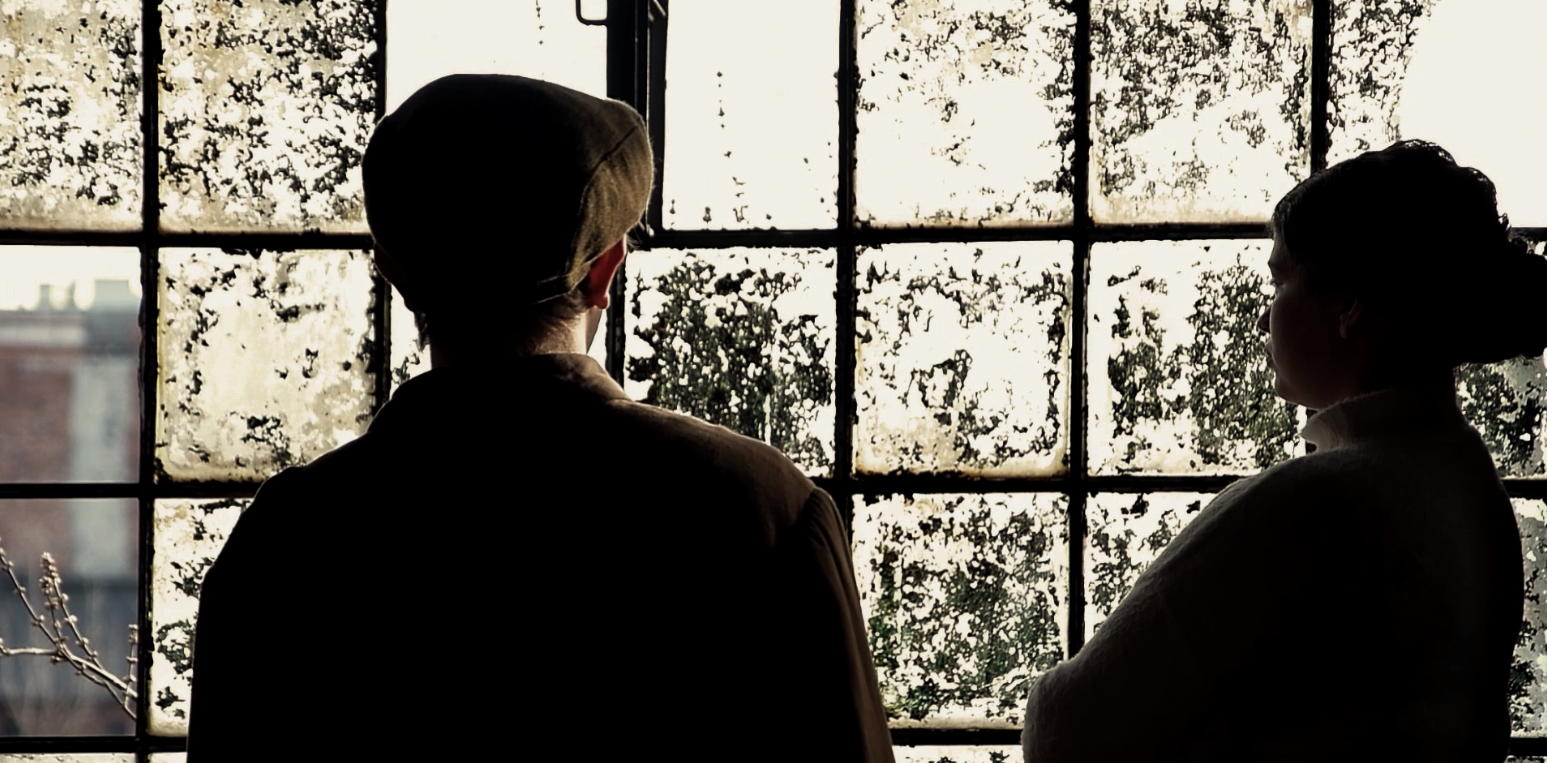
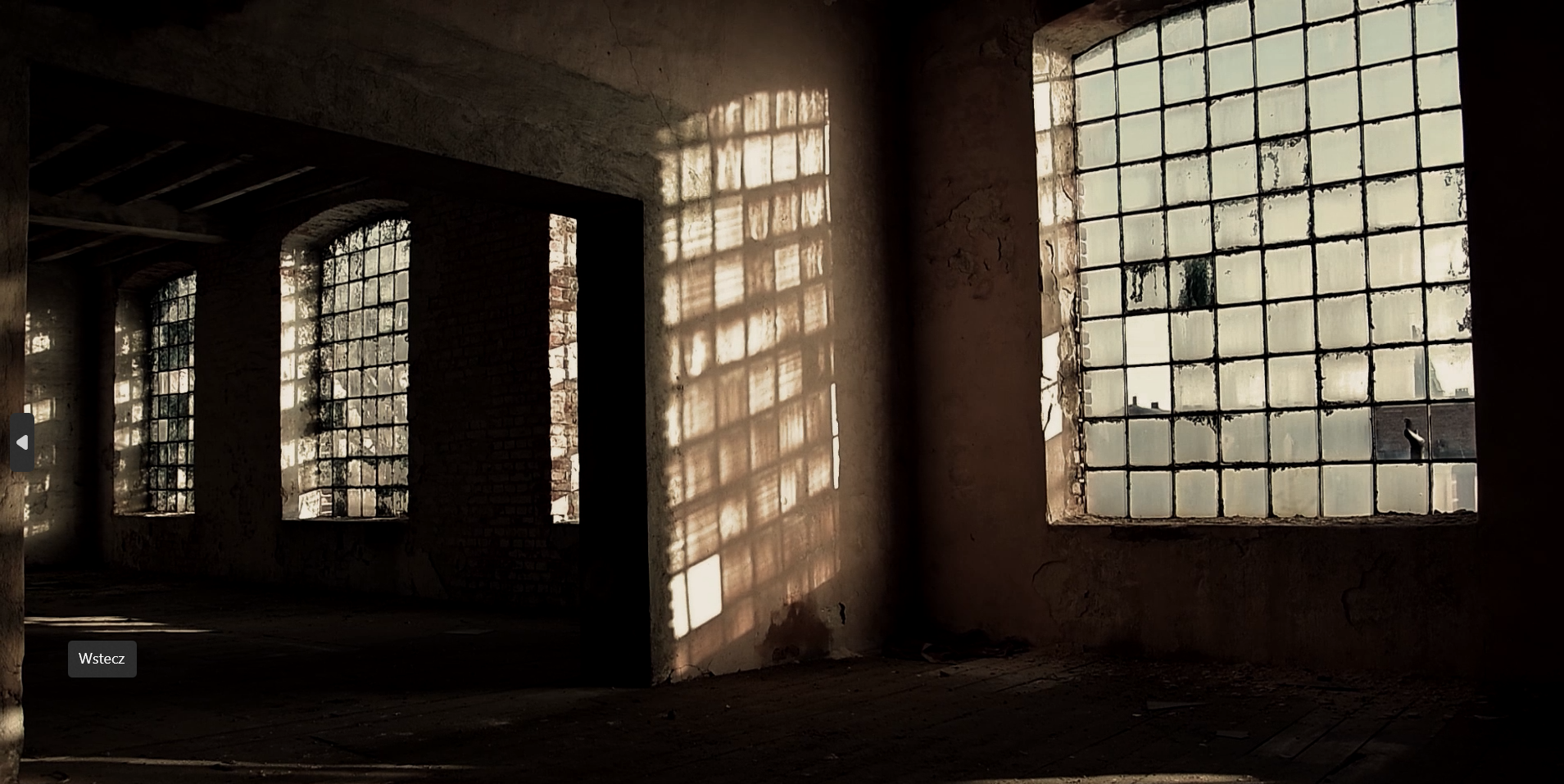
The performance opened with a scene of conspiracy – a film projection showed a meeting of four students led by Szuster, during which the protesters’ demands were formulated. The meeting was interrupted by an off-screen voice in Russian, with the Governor reminding everyone of the penalties facing all protesters. A moment later, the students ran onto the stage in panic – the performance took place in the school corridor, and the first scene was filmed in the school attic.
A narrow corridor with a vintage railing, reminiscent of the 1905 strike, became a space connecting the school’s materiality with the fictional plot. It was created on the basis of numerous source materials – censorship books with students’ names and grades, orders from the Governor of Piotrków, press reports from 1905, and finally texts by Władysław Reymont, an outstanding Polish writer and winner of the 1924 Nobel Prize in Literature for his novel ‘Chłopi’ (The Peasants). When strikes broke out in Poland, Reymont was in Warsaw and reported on the events of those days. At that time, he was already a recognised writer, author of the famous ‘The Promised Land’, depicting the capitalist Łódź, which at the end of the 19th century expanded at a rapid pace.
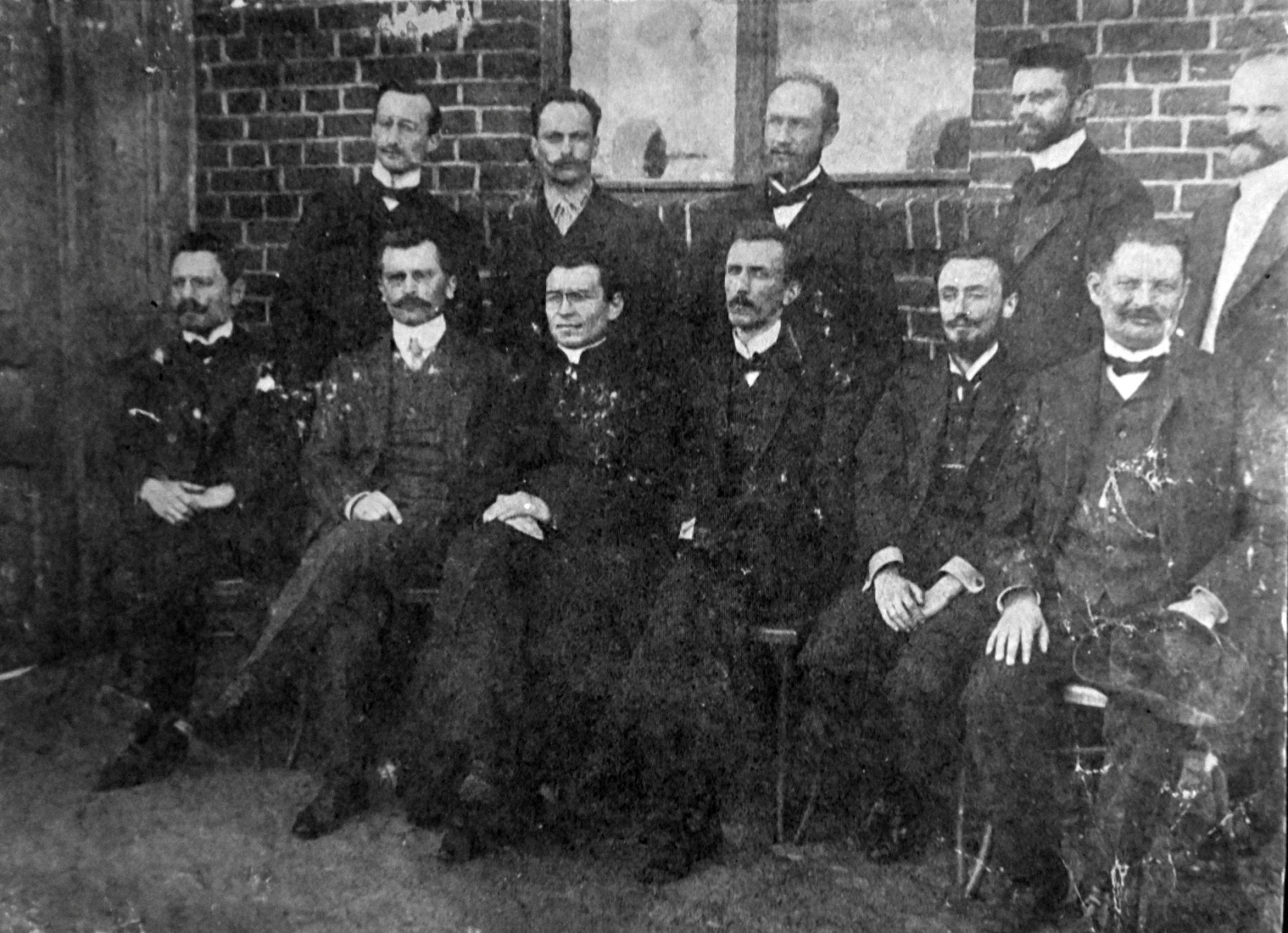
The dramatic structure of the performance focused on Lucjan Szuster, the initiator of the strike. However, it was necessary to introduce more characters in order to make the action more dynamic and to illustrate the nature of the school. The author of the script and the performance decided that the characters would be students of German and Jewish origin. The inclusion of historical figures in the plot was possible thanks to preserved school registers, which contain the names, dates and places of birth, as well as the religious affiliation of the pupils. Thanks to these source materials, the actors and actresses, as well as the audience, could expand their knowledge. The Humanities Secondary School, founded in 1903, was attended by children from wealthier families in Tomaszów of various ethnic backgrounds. In the interwar period, and thus slightly later, the school’s pupils had access to Catholic, Jewish and Evangelical-Augsburg religious education.

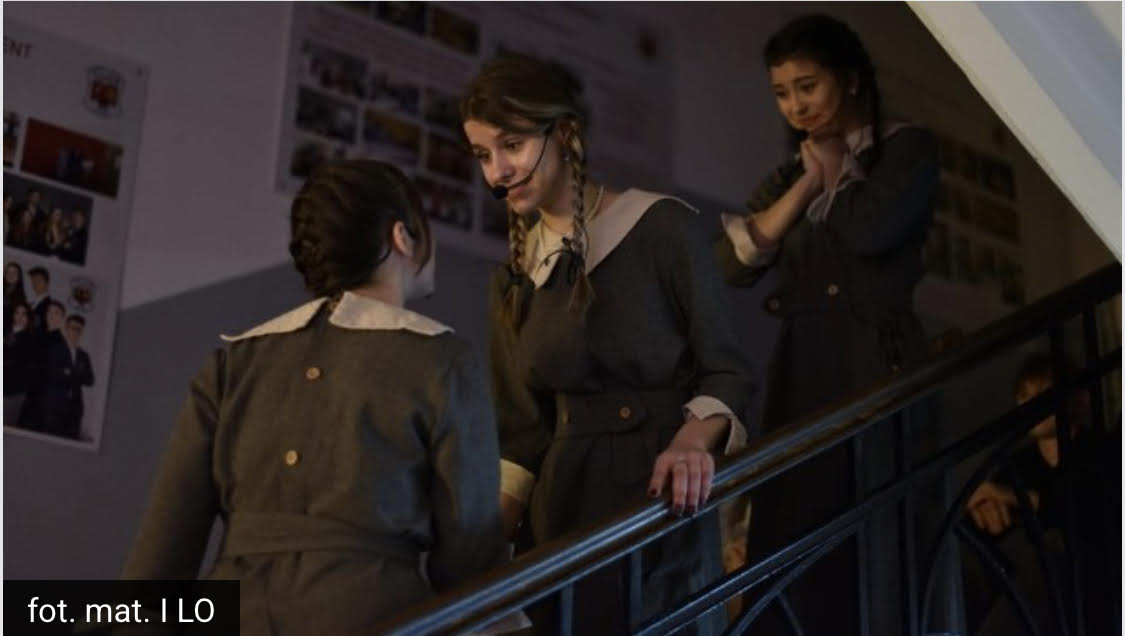
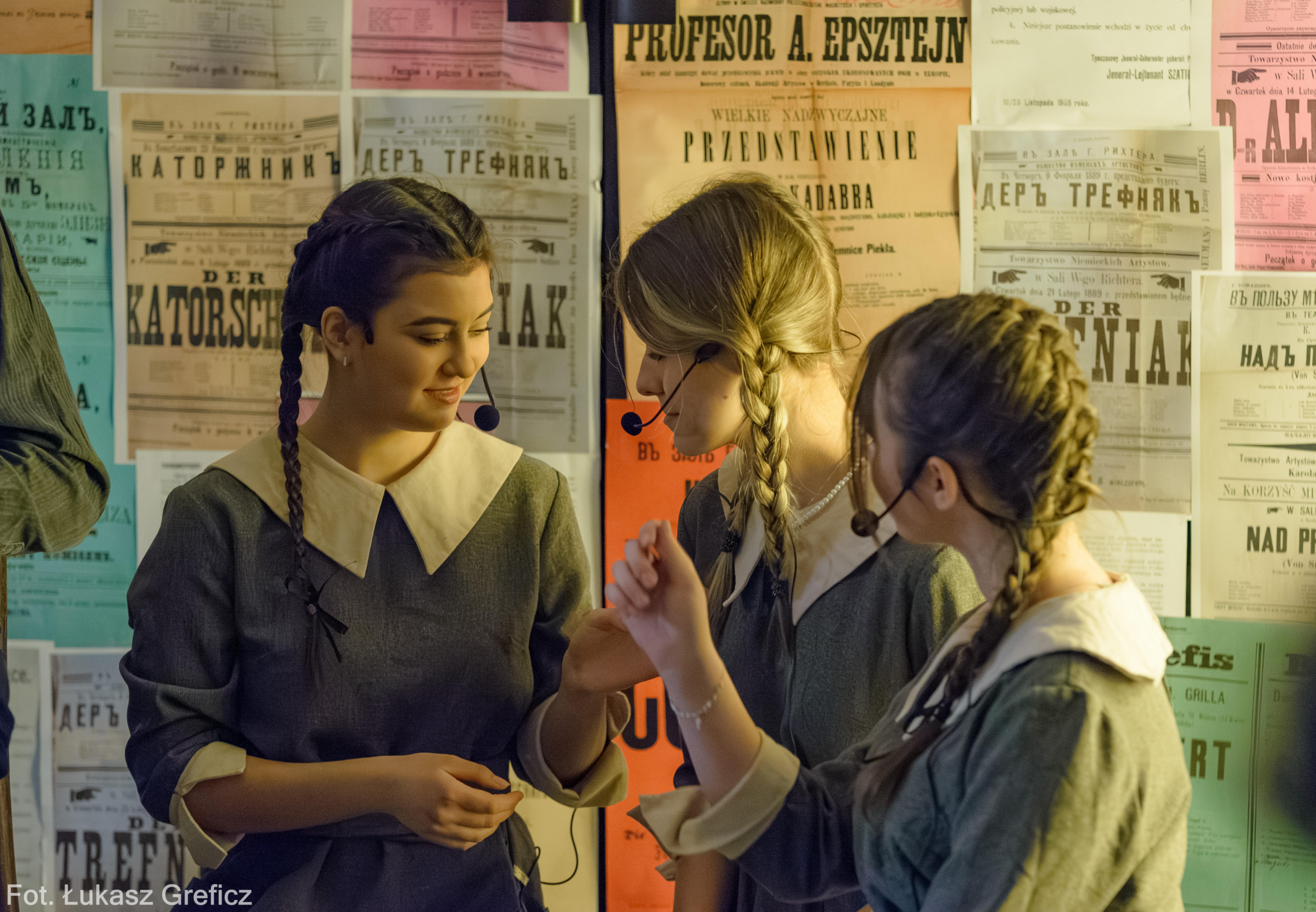
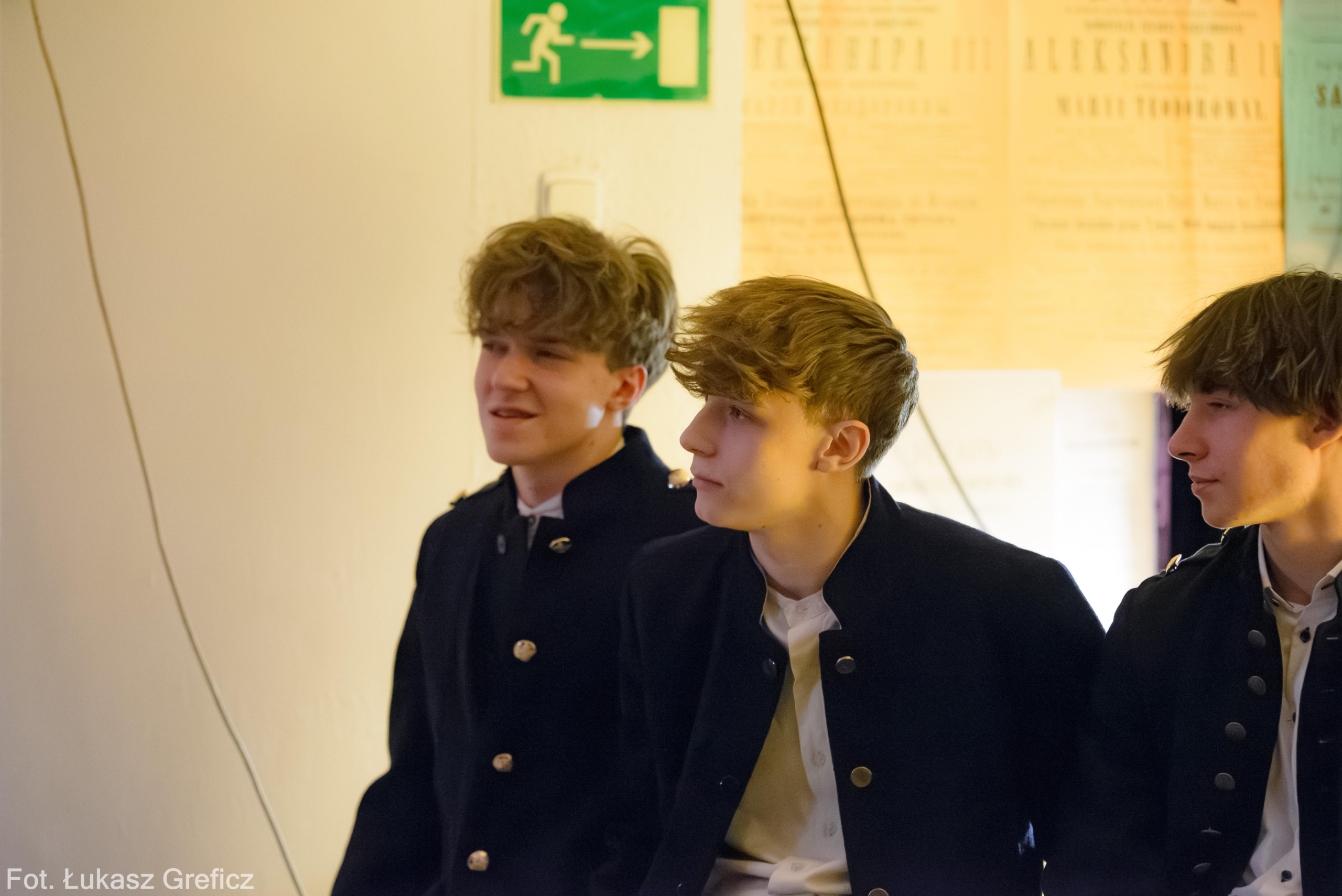
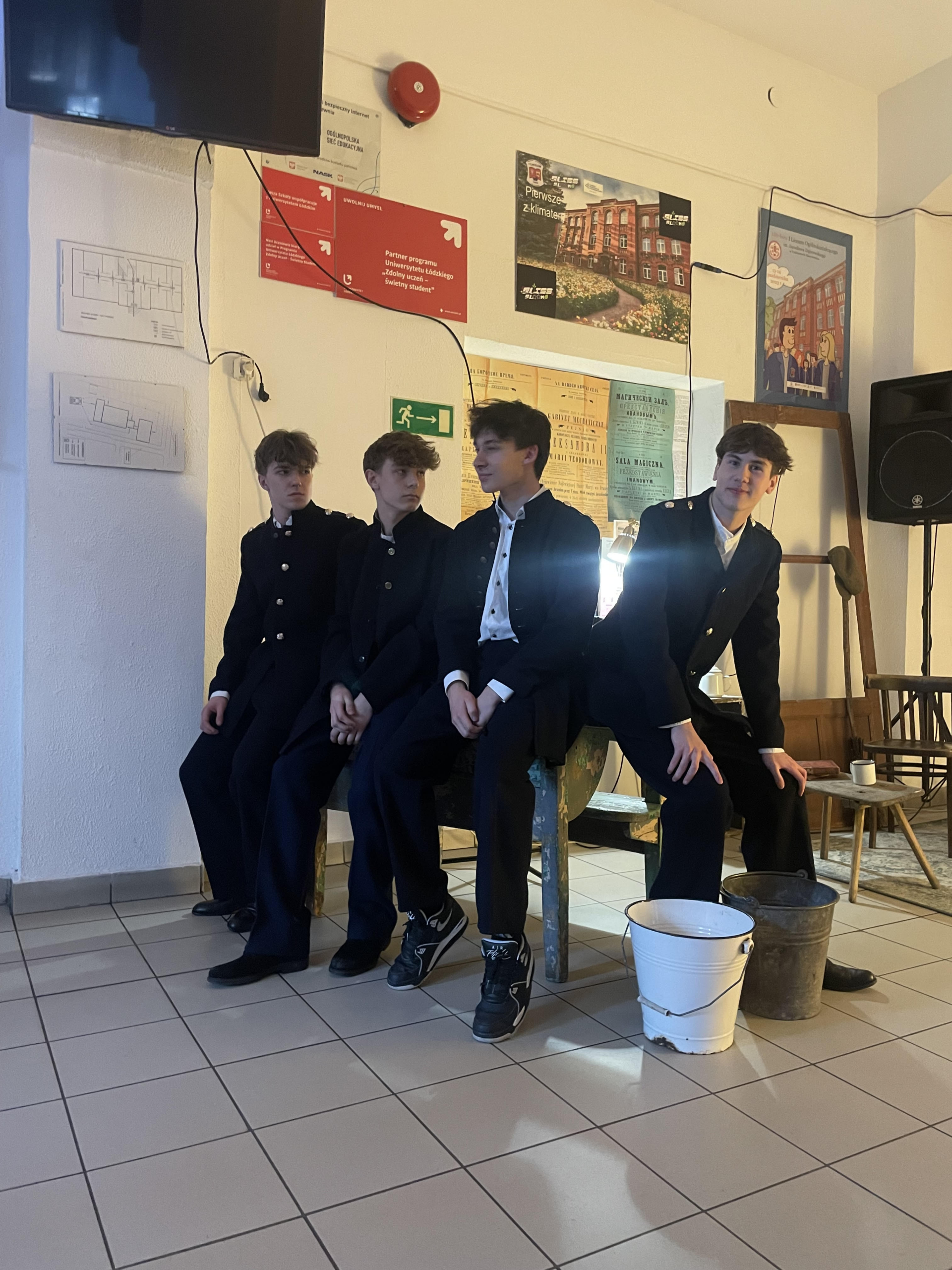
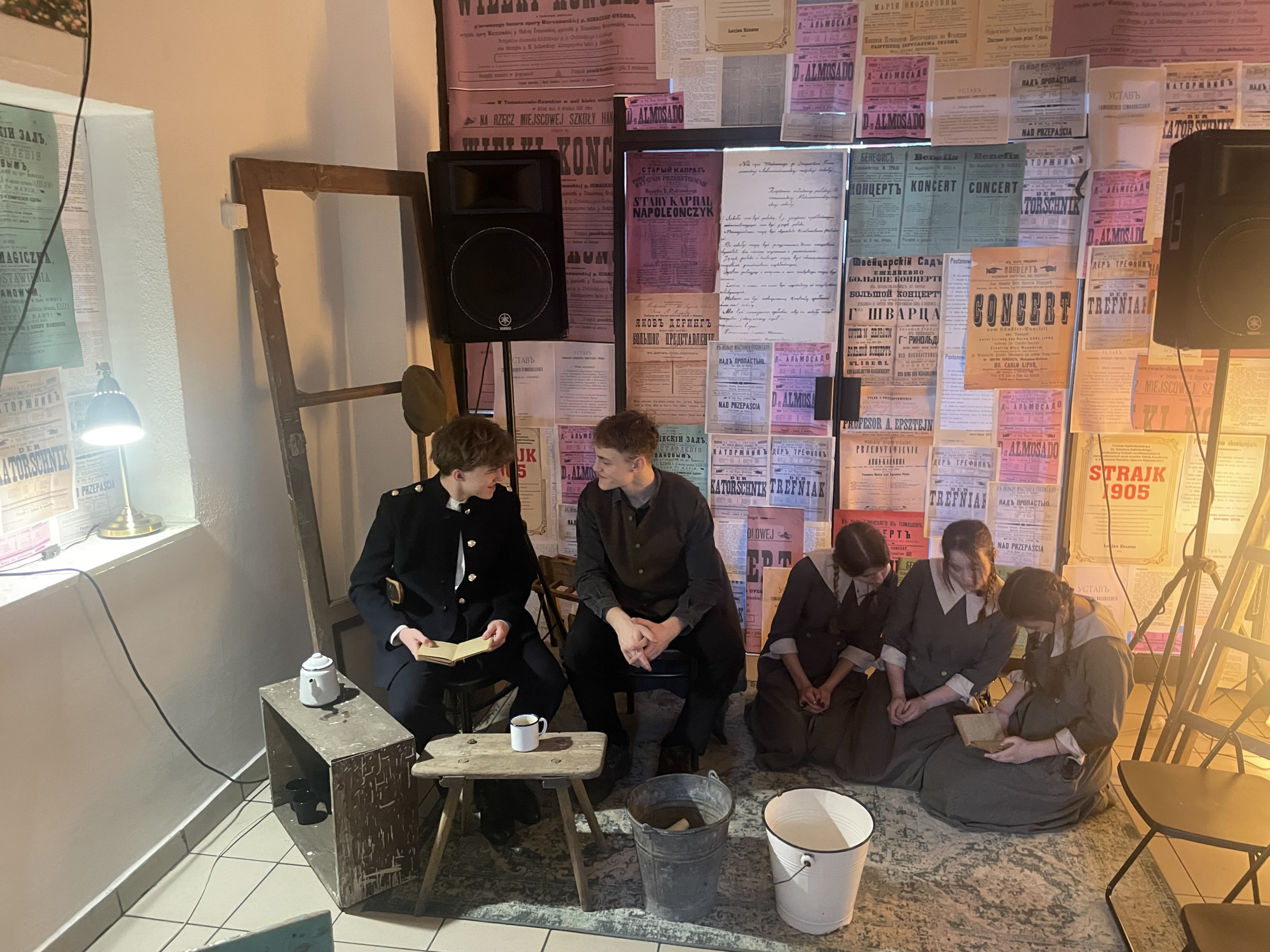
Although the secondary school was initially intended for boys, and so historically the strike involved only male students, female characters were introduced into the play. This dramatic move was designed to explore the issues of education in the early 20th century and the intense socio-political transformations in Tomaszów and many other cities in the Russian partition. The strike of the Tomaszów youth ended with the expected success – Polish was introduced as the teaching language and a Pole became the school’s headmaster. Nevertheless, Lucjan Szuster was given the so-called ‘wolf ticket’ and had to leave the school, and the school was additionally deprived of subsidies. Therefore, from 1912, in order to improve the financial system, the school began to accept female students.
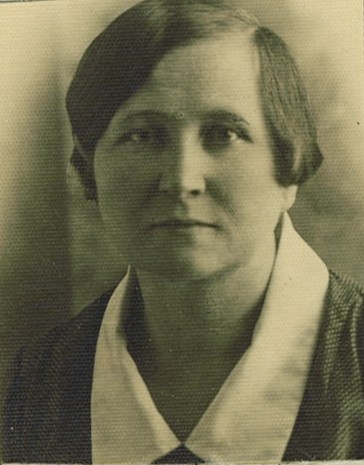
The play featured three female characters – some of the first students of the Humanities Secondary School, whom we learned about from preserved school diaries: Felicja Okuniew, Maria Krygier, and Frania Blajberg. Their presence on stage was symbolic; they foreshadowed the coming changes and represented the dreams of many girls of that time. According to the author’s intention, the secondary school students were joined by a girl from a Hasidic family from Tomaszów. This idea served to present the diverse community of Tomaszów to a wider audience.
Bronka Baum appeared on stage, singing the first verses of the song ‘Dos Kelbl’ (The Calf) in Yiddish. The song was written by Shalom Secund for the play ‘Esterka’, directed by Aron Cajtlin. ‘Esterka’ premiered in New York in 1940. The opening words of the song, ‘On a cart, it rides straight to the market/ A calf with a fearful gaze’, and the entire text about a calf destined for slaughter can be interpreted as a foreshadowing of the Holocaust. In addition to Bronka, who later emigrated to Palestine, the performance also featured Efroim Mortkowicz, who, at the time of the strike, was a 13-year-old first-year student. After graduating from secondary school, he studied medicine and became a surgeon. During the Nazi occupation, he stayed in the Tomaszów ghetto, where he became the head of the ghetto hospital.
Sitting on a pre-war, damaged and abandoned school bench, the actress read excerpts from the diary written by Bronka Baum. This unique source material provided insight into the young girl’s desire for education (in fact, we only have two diaries of women from Polish Hasidic families from before World War I – Bronka’s and Sara Szenirer’s, who came from Krakow and founded the Bais Yaakov school network for Jewish girls). The actress folded the piece of paper into an aeroplane and threw it forward. The paper message about her longing for school landed in the hands of her Polish friends. The four students performed a choreographed routine with meaningful gestures reflecting female social roles – cuddling children, washing floors, cooking. Their dance was accompanied by the song ‘Donna, Donna’, the English version of ‘Dos Kelbl’ performed by Joan Baez in 1960.
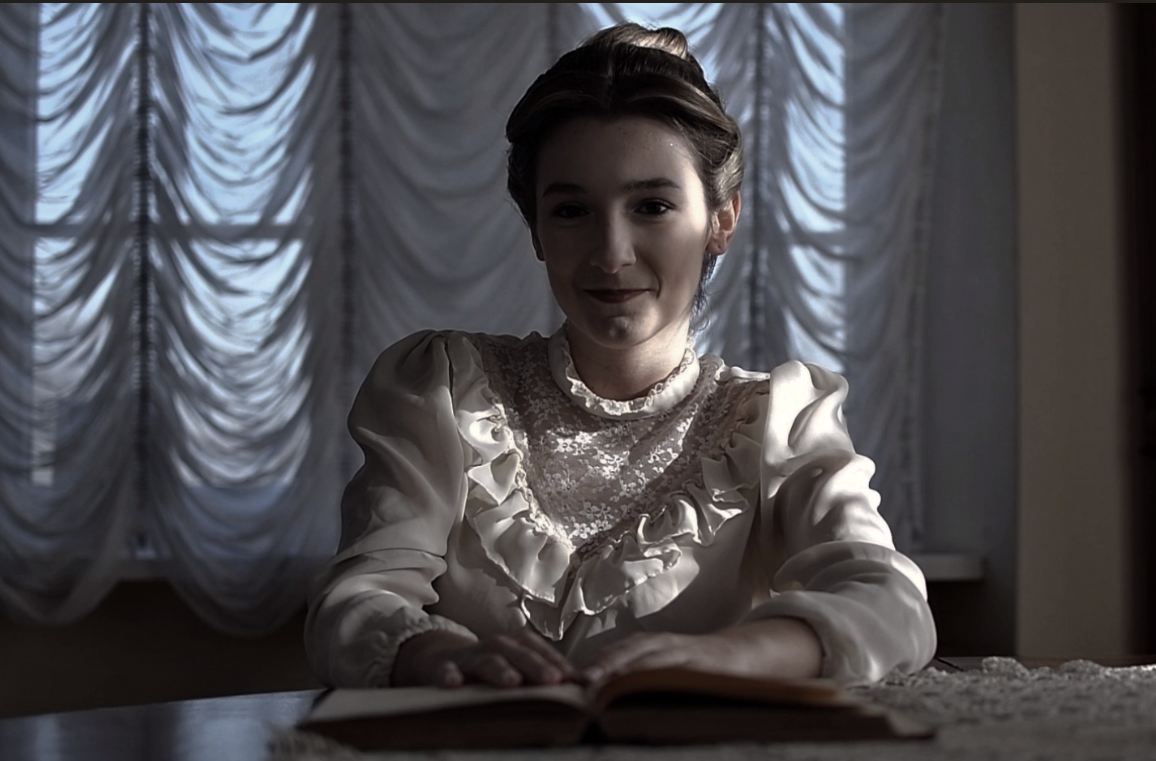
The performance’s scope was expanded to include film recordings featuring figures important to the history of Tomaszów, namely the poet Emilia Topas-Bernsztajnowa and activists from the Polish Socialist Party who supported the youth strikes of 1905. The recordings were made in the Tomaszów Museum, where a young actress read the poet’s poems, and the secret meeting between the young people and the activists of the Polish Socialist Party took place in an abandoned factory on Zgorzelicka Street. Preserved accounts report that during the strike, the activists of the Polish Socialist Party broke the windows of the school and painted over the image of the tsar with red paint.
This spectacular gesture of opposition to Russification was used in the performance. Red paint splatters resembling blood appeared on a portrait of Tsar Nicholas II displayed on a projector – the actors wielded their brushes and a metal bucket. The janitor came to their aid, climbing a ladder and adding the final strokes to complete the protesters’ work. Józef Skwarka, who worked as a janitor for many years, lived on the school grounds. The janitor was on stage throughout the performance – like a guardian of the place and a defender of values.
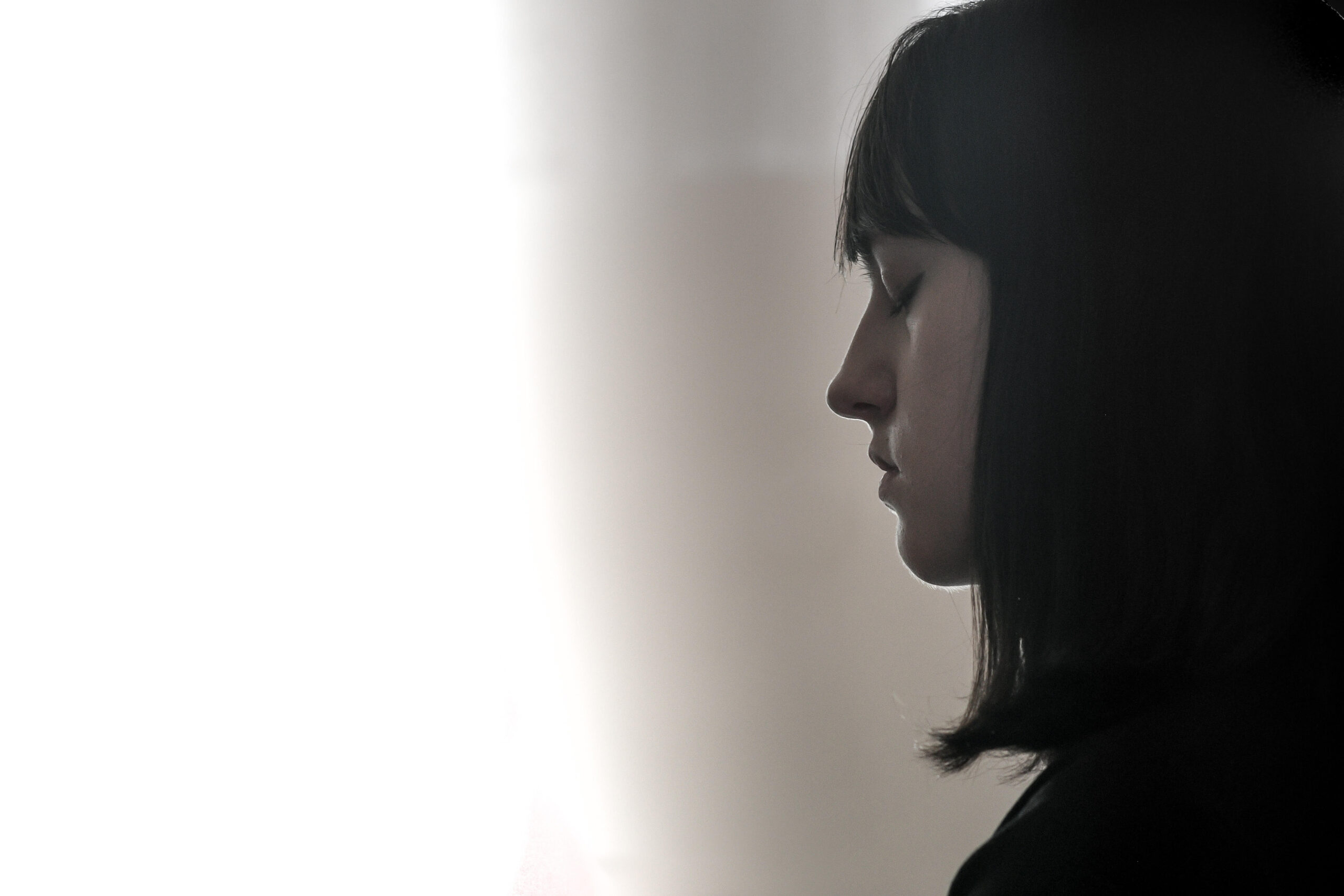
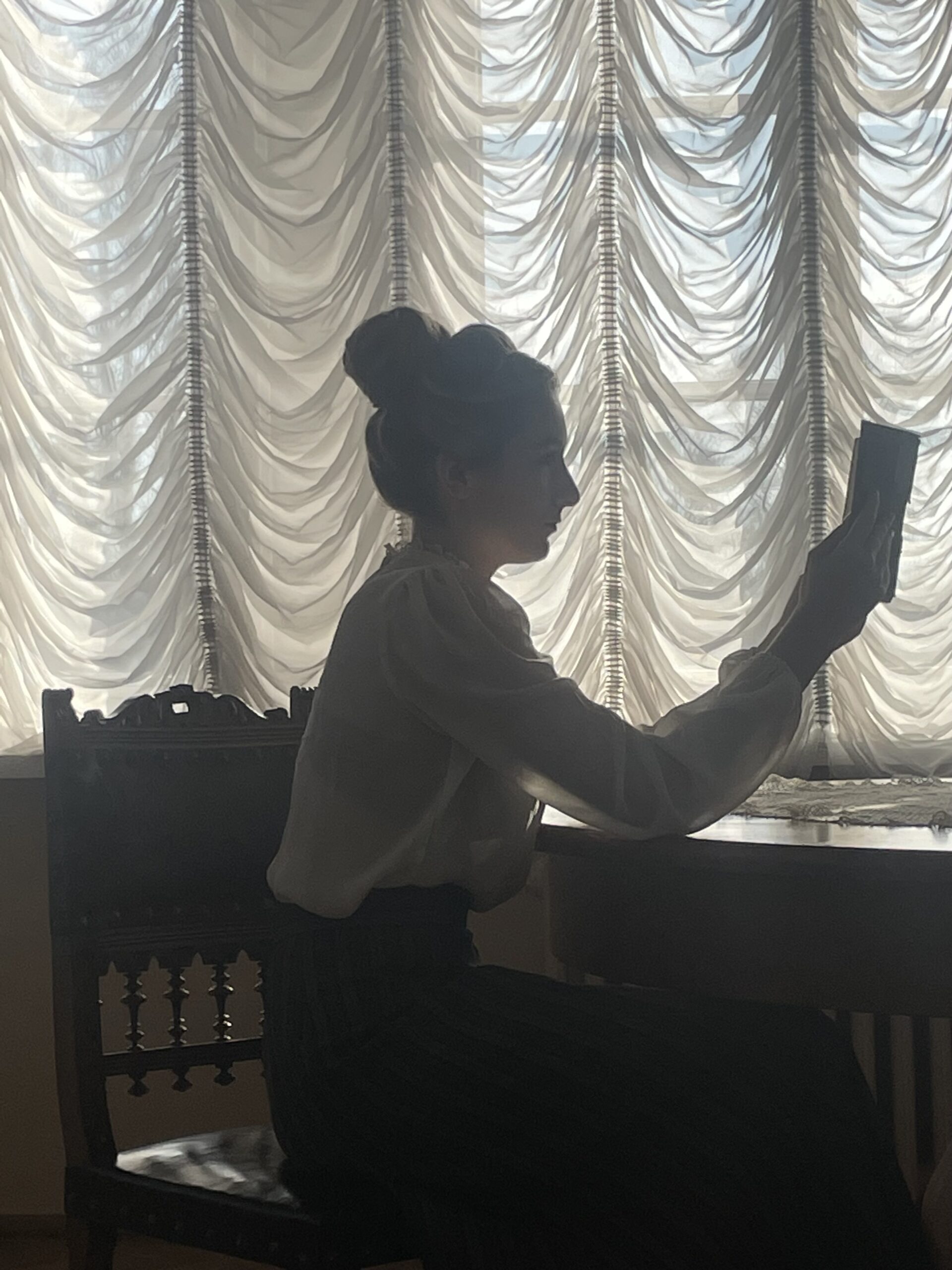
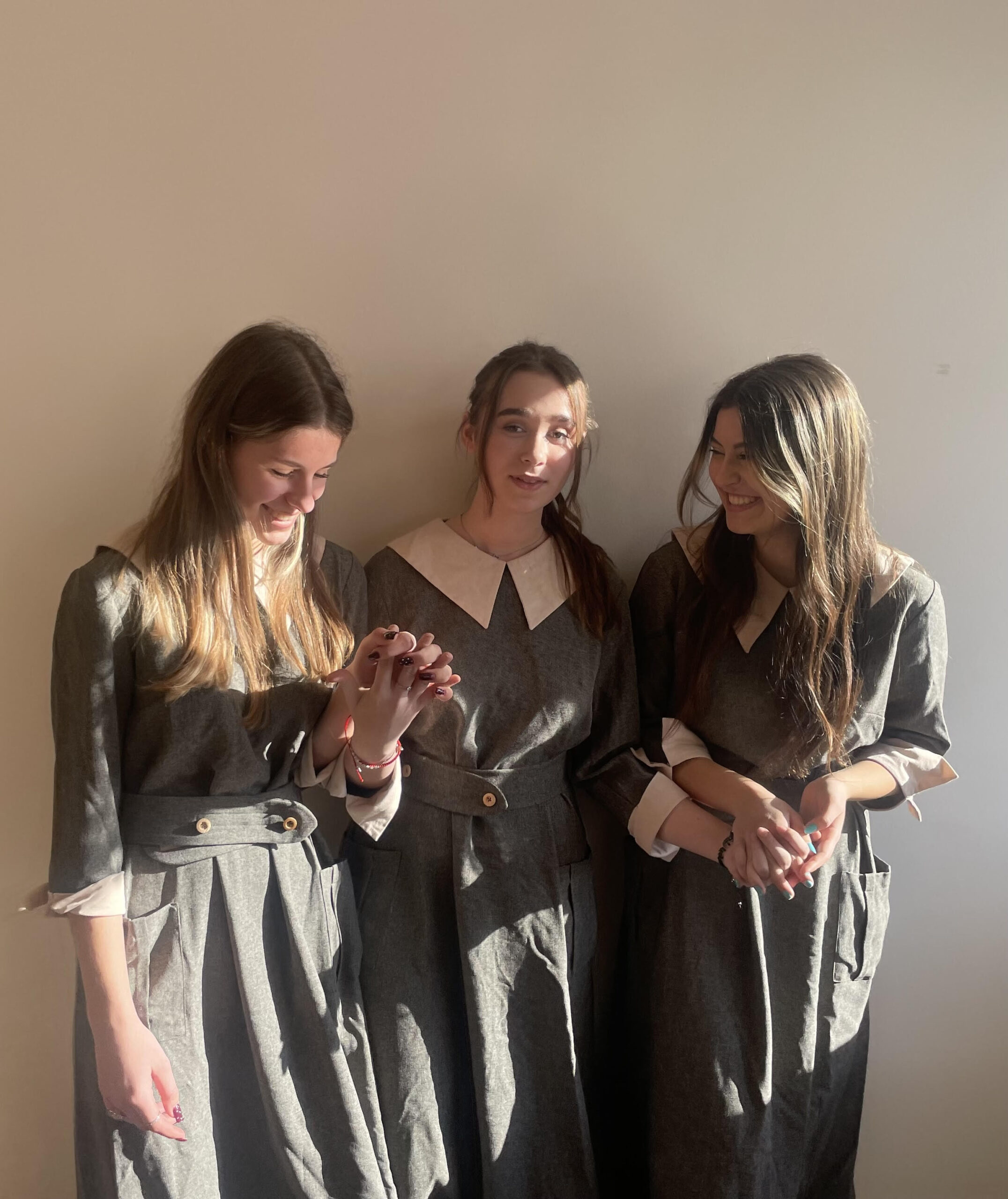


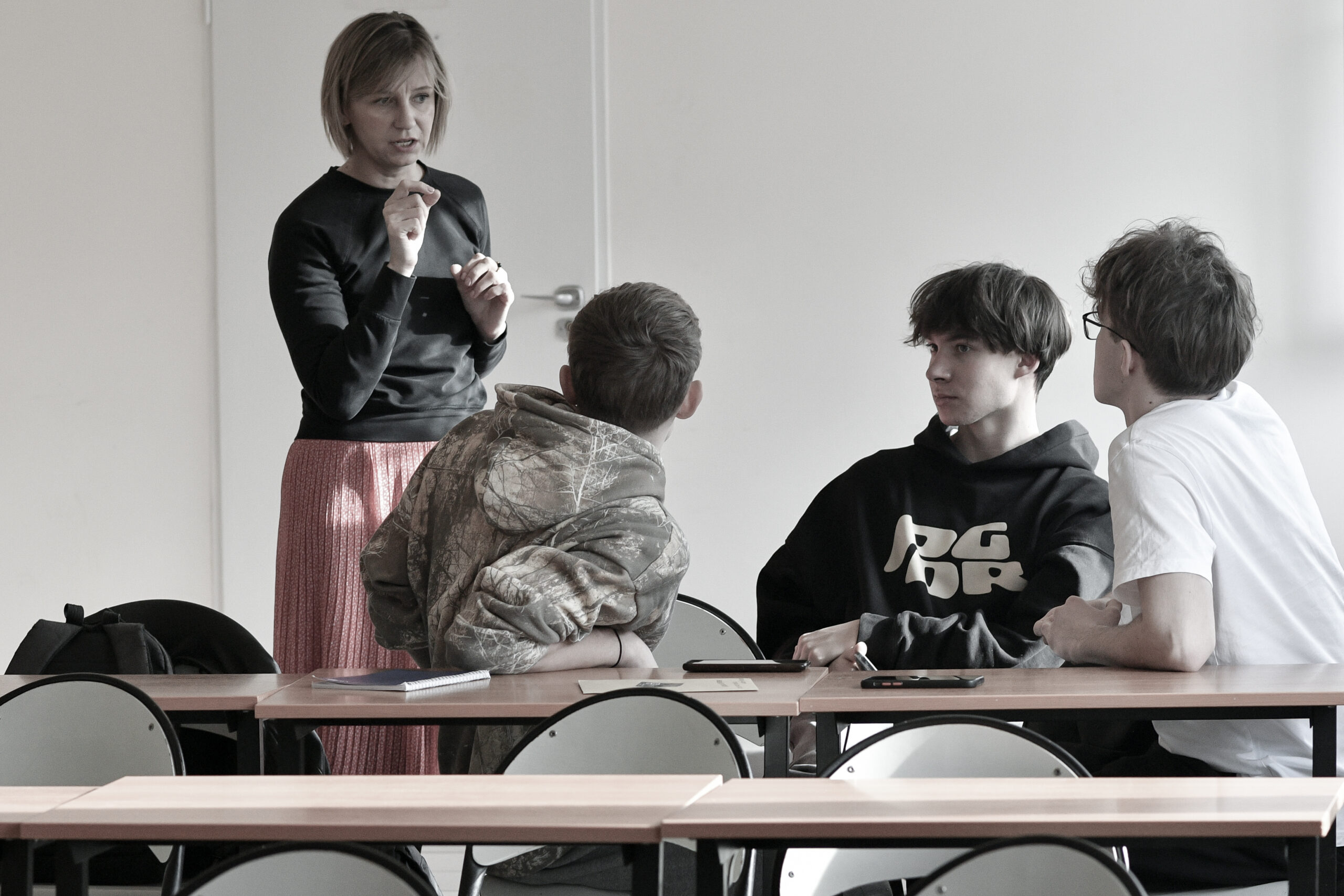
‘The 1905 Strike’ ended with a scene depicting Lucjan Szuster’s confrontation with the Governor. The actor, dressed in historical costume, wore a wolf mask. He emerged from the darkness of a narrow corridor, and his demonic laughter rang out from behind the audience. He shouted in Russian: ‘Nupagadi’, meaning ‘Well, just you wait!’, referring to the famous Eastern Bloc fairy tale ‘The Wolf and the Hare’, created in a Moscow studio in 1969. The character of the Wolf hunting the Hare, creating a network of symbols from different historical periods, was intended to represent Russian aggressive politics and the lust for power.
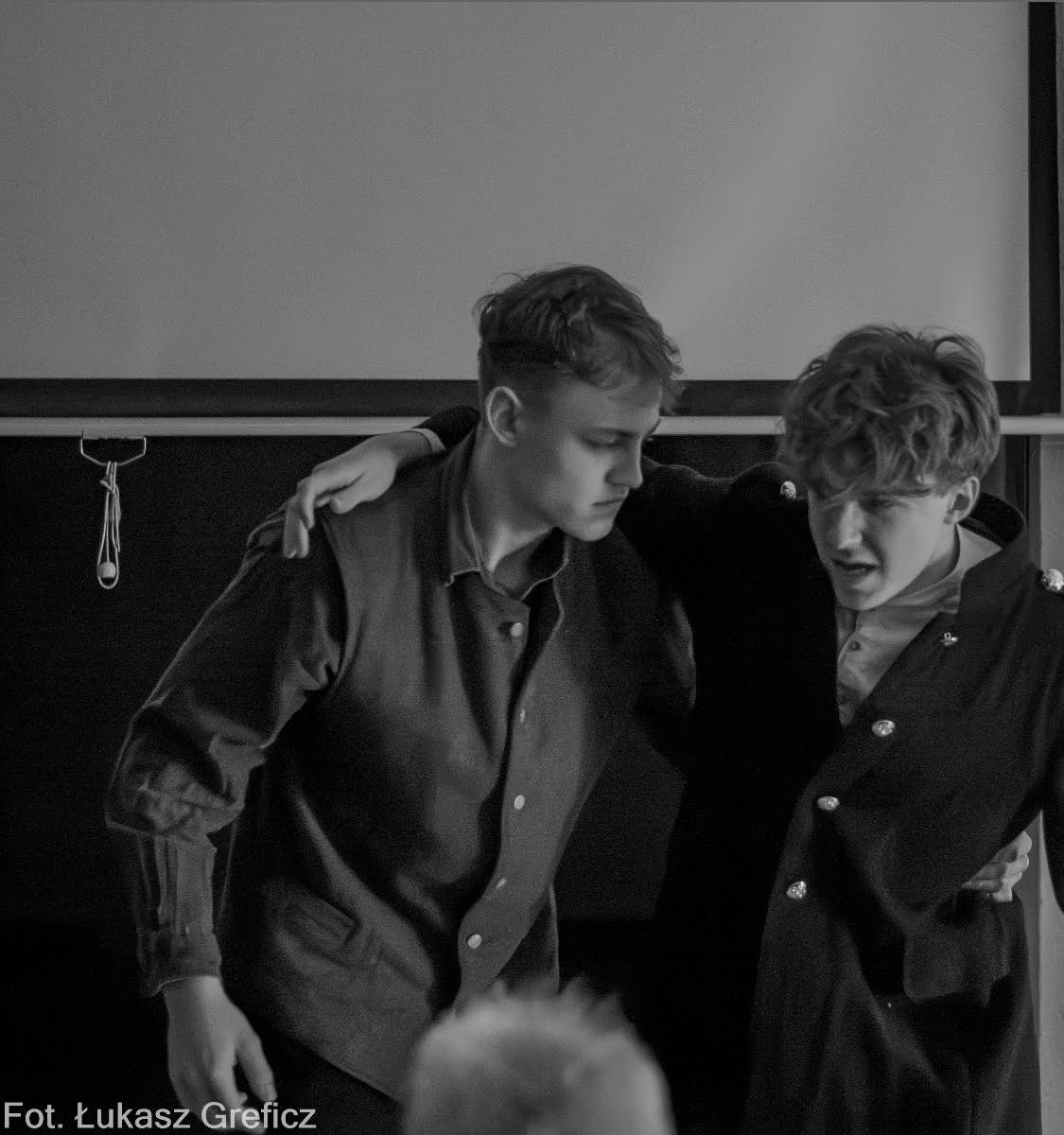
Szuster and the Governor-Wolf walked around each other along an invisible circle like enemies on hard ground. Each stomp of the oppressor was a blow to the protester – Szuster staggered in pain, clutching his belt, then got up again. The Governor’s last, third blow was the strongest. The Wolf let out a mocking laugh. Szuster struggled to stand up one last time, winning the duel. However, as his opponent and oppressor walked away with a slow, soldierly gait, Lucjan began to lose his balance. The fight had cost him a lot of strength – the Wolf can be seen not only as a dangerous external political force, but also as an internal saboteur, threatening sanctions if the strike went on and asking the question: was it worth it?
Szuster gently fell into the arms of his colleagues. Rachmaninoff’s Op. 34 No. 14 played over the loudspeakers, and photos of all the actors and actresses appeared on the screen, along with descriptions of the characters they played.
After the strike ended, Lucjan Szuster moved to Kielce, where he finished school and then studied in Geneva. He lived with his wife and three children in Łódź, where he worked for the Social Insurance Institution. During the Nazi occupation, he was active in the underground and was shot in June 1944.
Efroim Mortkowicz perished in 1943 in the ‘small ghetto’ in Tomaszów. The Tomaszów ghetto was liquidated at the turn of October and November 1942.
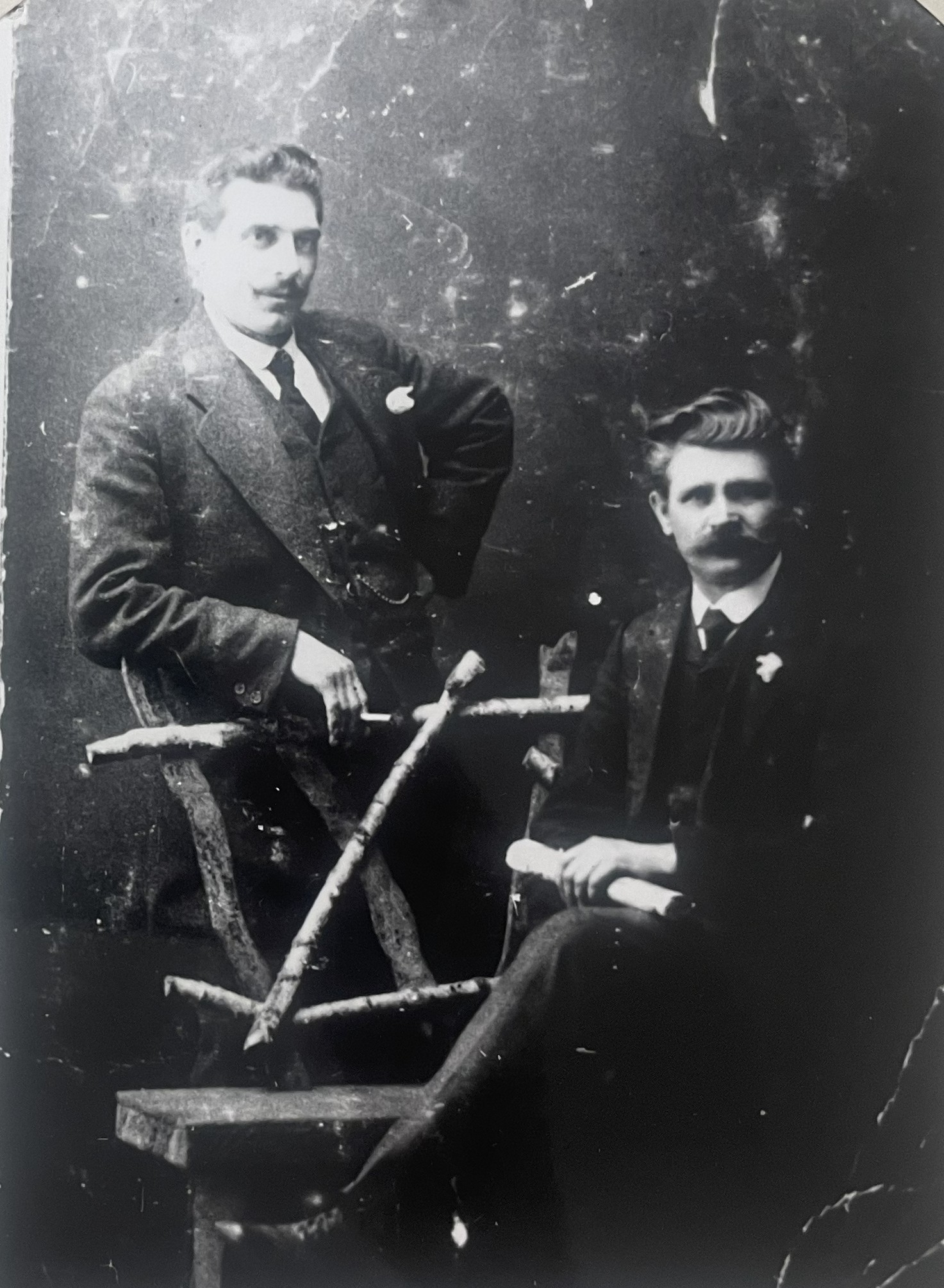
The fates of Szuster’s two other classmates, Gustaw Bartke and Ryszard Jurgielewicz, are unknown. We know that Jurgielewicz became an accountant, lived in Tomaszów with his wife and daughter, and died in 1954.
We also do not know the full fate of the female students. The only thing that is certain is that Maria Krygier studied at the University of Warsaw after graduating from secondary school.
Bronka Baum left for Palestine in 1925, where she promoted religious feminism and girls’ education. She wrote poetry in Yiddish.

Bądź pierwszym który skomentuje